Awful Adjectives and Meaningless Metaphors.

Lincoln Center for the Performing Arts was conceived in the late 1950s as an experiment in consolidating the top performing arts organizations in New York into one location. It was the beginning of the modern performing arts center concept and is arguably the most recognizable performing arts center in the United States. The history of Lincoln Center is the subject of many books, and the artistry of its eleven resident companies is documented in miles of newspaper column inches. It was also where I spent a defining chapter of my career as Managing Director of the David H. Koch Theater.
Here's an interesting fact: The architects of Lincoln Center, primarily Philip Johnson who created the plaza, drew inspiration for its design from Michelangelo’s 16th-century Piazza del Campidoglio in Rome.
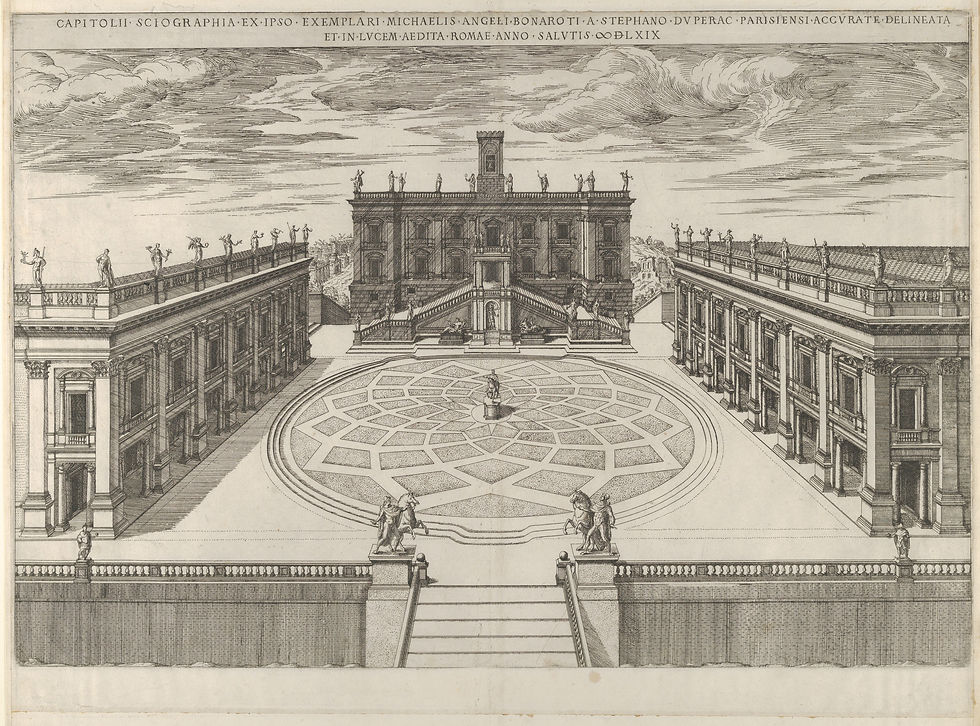
Michelangelo, in turn, drew his inspiration from the ancient Capitoline Hill and the Temple of Jupiter Optimus Maximus (the central Palazzo dei Conservatori was built atop the ancient Roman ruins). The implications of such an architectural through-line are evident: the venues at Lincoln Center were meant to be secular temples to the performing arts.
A few days ago I was perusing their website to take a look at their plan to renovate Damrosch Park, a small corner of the campus that includes the Guggenheim Bandshell. Perpetually underutilized, Damrosch Park badly needs the refresh. The design concept looks wonderful. It opens up Lincoln Center to the west side, relocates the performance space, and generally makes the space more inviting. Scrolling down the page however, to my dismay I came across this hackneyed phrase: "A World-Class Performance Park with Greater Access for All."
I have a particular gut reaction to the term "world-class" when describing a performing arts venue. Whether it's the Arborgast in Troy, Ohio, the Broward Center in Fort Lauderdale, or so many others I've encountered, the term has become ubiquitous. They may be fine venues with great programming, but they serve primarily regional communities. How can they be "world-class?" As for Lincoln Center, already the premier cultural center in the country, is it not already implicitly world-class? And really, how can a park be "world-class" in the first place?
The Oxford English Dictionary cites the first occurrence of the term "world-class" in 1939 in reference to a horse-pulling contest. For the following twenty years, the term was used to describe a level of athletic achievement that was quantifiable and measurable. World-class literally meant the best above all others. You were the greatest, or you weren't. Around 1960 the meaning morphed into describing anything that ranks alongside the best in the world. The OED tracks the frequency of use from .008 per million words in 1960 to .88 per million in 2010. I'm convinced that a good chunk of those references were written by arts marketing departments or some variety of a consultant to pitch a performing arts center in their local community.
In case you think this is just my own personal rant against lazy marketing language, at least I am in good company. In a short essay on language, George Orwell described these phrases as "dead metaphors." He calls them"a huge dump of worn-out metaphors which have lost all evocative power and are merely used because they save people the trouble of inventing phrases for themselves."*
Rounding out the list of dead metaphors used to describe performing arts venues includes:
"State-of-the-art" (which made its debut in a 1910 manual describing a gas turbine)
"Jewel in the Crown" (literally the crown jewels?)
"Cultural destination" (a bureaucratic euphemism for a tourist attraction.)
"Economic Engine/Driver/Catalyst" (by far the most dangerous phrase, often used in conjunction with the notion that the performing arts center will be self sustaining through ticket sales.)
...and on and on. Feel free to add your own.
By using dead metaphors, we diminish the quality of the very thing we mean to celebrate. It brings to mind the quip about shopping at Tiffany's: if you have to ask how much it costs, you can't afford it. If you have to call your venue "world-class," it probably isn't.
_______________________________________
*Orwell, George. "Politics and the English Language." Horizon 13, no. 76 (April 1946): p. 255.

